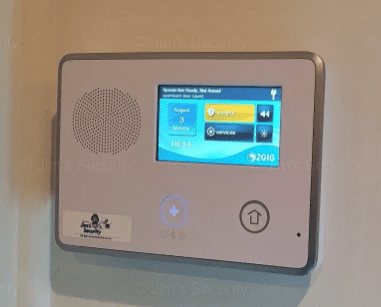
Most alarm systems installed in Australian homes are sitting in isolation. They do their job — trigger a siren, dial a monitoring centre — but they have no awareness of anything else happening in the house. Your cameras don’t know the alarm triggered. Your lights don’t respond to a zone breach. Your phone gets a call from a monitoring centre, not a live snapshot of what set it off.
That’s not a security system. That’s a siren with a phone line.
We connect your existing alarm panel directly into Home Assistant, turning it into an active participant in your home’s full automation network. Real-time zone visibility. Dashboard and phone control. Camera integration. Automated responses. And cross-system logic that means every part of your security setup knows what every other part is doing.
No rip-and-replace. No new panel required in most cases. Just your existing system, finally doing what it should have been doing all along.
The difference between a standalone alarm and an integrated one is the difference between a smoke detector and a fire suppression system. One alerts. The other acts.
Arm and disarm from anywhere— Full arm, home arm, and disarm from your Home Assistant dashboard, wall tablet, or phone. No keypad required. No codes to remember on the way out the door. One tap from your phone before you’ve left the driveway.
Real-time zone status— Every zone on your alarm panel — every door contact, every PIR sensor, every window — is visible on your dashboard in real time. See exactly which zones are open, which are closed, and which have triggered, without going to the panel.
Push notifications on any event— Zone triggers, alarm activations, arming and disarming events, tamper alerts — all pushed to your phone instantly. Not a call from a monitoring centre ten minutes later. An alert the moment it happens, with the context to act on it.
Camera snapshot on trigger— When a zone triggers, the nearest camera captures a snapshot automatically and attaches it to the notification. You see what set the alarm off before you’ve decided how to respond. Motion in the lounge at 2am means you’re looking at a live image within seconds.
Coordinated lighting response— Alarm trigger activates all exterior lights simultaneously. Perimeter flood. Visible deterrent. Documented in your automation log with timestamp.
Voice announcements— Google Nest Minis and Hubs announce zone alerts verbally throughout the house. “Motion detected at the rear door” through every speaker in the property — audible in every room, not just where the siren is.
Cross-system automations— Arm the alarm and the system locks all smart locks, closes the garage, turns off non-essential devices, and activates the camera recording mode simultaneously. One action. Everything responds.
We integrate most major alarm panels installed in Australian homes. Current confirmed integration paths include:
Hills Reliance— one of the most common panels on the Central Coast. Full zone status, arm/disarm, and event monitoring via serial or IP interface.
Bosch Solution series— Solution 2000, 3000, and 6000. Zone status, arming modes, and event notifications via the Bosch integration.
Paradox— EVO and SP series. Full zone and partition control via IP150 or serial adapter.
DSC PowerSeries— NEO and classic series via IT-100 serial interface or IP module.
Ness— D8x and M1 series. Integration via IP module with zone and arm/disarm support.
Inner Range Inception— Native REST API integration. One of the cleanest alarm integrations available in Home Assistant.
Honeywell/Resideo— Vista series via IP integration module.
2GIG and compatible panels— via Z-Wave or IP integration depending on model.
Generic panels— Where a direct integration doesn’t exist, we assess whether a serial interface or IP module can bridge the gap. Many older panels can be connected via a relay-based approach that at minimum provides arm/disarm and alarm state visibility.
Integration depth varies by panel and firmware version. We confirm exactly what’s achievable for your specific hardware during the free on-site assessment — before any work is quoted.
If your property doesn’t have an alarm panel, you don’t need one to get comprehensive security integration.
We deploy standalone sensors directly into Home Assistant — no traditional alarm panel required:
PIR motion sensors— Zigbee or Z-Wave passive infrared sensors placed at entry points, hallways, and coverage zones. Instant state reporting to Home Assistant with no polling delay.
Door and window contacts— Every door and window that matters gets a contact sensor. Open states are visible on the dashboard, feed into arm/disarm logic, and trigger notifications when the system is armed.
Glass break sensors— Acoustic sensors that detect the specific frequency signature of breaking glass. Positioned to cover rooms with multiple windows from a single unit.
Siren and strobe— A smart siren integrated directly into Home Assistant, triggered by the automation logic we build rather than a panel. Louder, more flexible, and fully coordinated with the rest of your system.
Smoke and CO detection— Zigbee smoke and carbon monoxide detectors integrated into the dashboard and automation layer. Trigger your lights, unlock your doors, announce the alert through every speaker, and push an immediate notification — all automatically.
The result is a security system that’s more capable than most traditional panel-based setups, built entirely within Home Assistant, with no monitoring contract required.
We don’t lock you into a monitoring contract. How you handle alarm events is your decision.
Some customers self-monitor via push notifications and camera access. Others retain their existing monitoring service and add the Home Assistant integration on top for additional visibility. Others use a hybrid — self-monitoring day-to-day with a monitoring centre as backup.
All three configurations are valid and all three are supportable. We build the integration to work with whatever monitoring approach you choose, and we don’t take a clip from any monitoring service we might recommend.
The most significant capability that comes from alarm integration isn’t the arm/disarm convenience. It’s what happens when the alarm and the camera system finally share information.
When a zone triggers, the camera covering that zone captures a snapshot and sends it with the notification. When the alarm arms, cameras switch to a higher motion sensitivity profile. When the alarm activates, every camera starts a local recording clip. When it’s disarmed, the system logs who disarmed it, at what time, and from where.
The alarm knows what the cameras see. The cameras know what the alarm state is. Automations bridge the two. This is what a genuinely integrated security system looks like — and it’s only possible when everything runs through the same platform.
Your alarm integration appears as a dedicated security panel on your Home Assistant dashboard:
Available on your wall tablet, phone, and any browser. Controllable from anywhere with remote access enabled. Visible at a glance from anywhere in the house.
Will integrating my alarm void my warranty or monitoring contract?Integration via IP module or serial interface doesn’t physically modify the alarm panel. In most cases this doesn’t affect hardware warranty. Your monitoring contract terms vary by provider — we recommend checking with your monitoring centre before proceeding if you have an active contract. In practice, most monitoring centres are unaffected by adding a local integration alongside their service.
My alarm is quite old. Can it still be integrated?Depends on the panel. Older panels often have serial interfaces that can be bridged. Some very old or obscure panels have no viable integration path. We’ll give you a straight answer during the assessment — if integration isn’t feasible, we’ll tell you what a native Home Assistant sensor build would cost as an alternative.
Can I keep my existing keypads?Yes. Integration adds control options — it doesn’t remove existing ones. Your keypads continue to function exactly as they always have.
Do I still need a monitoring service?That’s entirely your call. Self-monitoring via push notifications and camera access is viable for many properties. If you want a monitoring service as a backup, we can help you set up the integration to work alongside it. We don’t push monitoring contracts.
What if a sensor goes offline or the integration drops?Your alarm panel continues to operate independently of the Home Assistant integration. If the integration loses connection, the panel functions exactly as it did before — the only thing that changes is the dashboard visibility and automation triggers stop firing until the connection is restored.
Can you integrate my alarm if I’m not a new installation customer?Yes. Alarm integration can be added to any existing Home Assistant installation as a standalone service. Contact us with your panel brand and model and we’ll confirm integration options.
Book a free assessment and we’ll tell you exactly what integration is possible for your existing panel — and what your security system looks like when everything’s connected.