Your garden is the part of your home that needs the most attention and gets the least automation. Manual watering schedules that run regardless of rainfall. No visibility into what’s actually happening in the soil. No early warning when something’s wrong with your plants. And a weather station that’s really just a BOM postcode estimate that might be measuring conditions three suburbs away.
We integrate soil sensors, smart irrigation valves, a personal weather station, and AI-powered camera monitoring directly into your Home Assistant system — giving you real data about what’s actually happening in your garden, automations that respond to it, and a level of visibility that changes how you grow things.
The difference between a BOM forecast and what’s actually happening in your backyard is often significant. Microclimate conditions on the Central Coast vary considerably across even short distances — coastal exposure, elevation, vegetation cover, proximity to water all affect what your garden is actually experiencing.
We install and integrate a personal Wi-Fi weather station that feeds live hyperlocal data directly into Home Assistant:
All of this feeds into your Home Assistant dashboard as a live local weather panel — and more importantly, into the automation engine that acts on it.
Watering schedules based on time alone are a blunt instrument. A timer doesn’t know it rained last night. It doesn’t know one bed is draining faster than another. It doesn’t know the soil temperature has dropped enough that your plants have slowed their uptake.
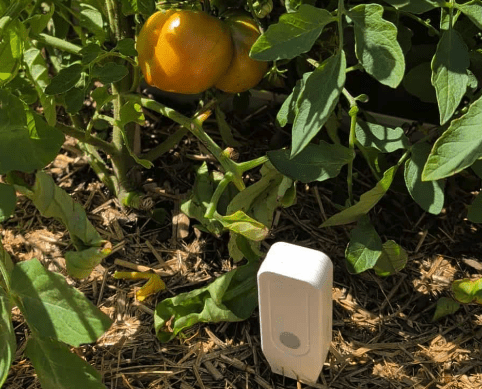
We deploy Zigbee soil sensors across your garden beds and planters, measuring:
All readings appear as live gauges on your dashboard. Historical graphs show moisture trends over days and weeks. And automations fire based on actual soil state — not what a timer thinks should be true.
This is where garden automation moves into territory most people haven’t seen before.
We position a dedicated camera — or repurpose coverage from an existing security camera — to monitor your vegetable patch, orchard, or garden beds on a scheduled basis. Home Assistant captures regular still images and passes them to an AI vision model for analysis.
Wilting— drooping leaves and stem posture that indicates water stress before visible damage occurs. Early detection means intervention before loss.
Discolouration and disease— yellowing, spotting, mottling and unusual colour patterns that indicate fungal infection, bacterial disease, nutrient deficiency, or pest activity. Caught early, most of these are manageable. Caught late, they’re not.
Pest damage— leaf damage patterns consistent with caterpillars, aphids, beetles or other common garden pests. The AI doesn’t identify the pest, but it flags the damage signature for your review.
Rot and decay— particularly useful for fruit monitoring. The camera detects visual signs of rot on developing or ripening fruit and alerts you before it spreads or drops.
Foreign objects and disturbance— animals in the garden, disturbance around seedlings, or anything that doesn’t match the expected scene from a previous capture.
When the AI identifies a concern, it surfaces a flagged snapshot on your dashboard with a plain-English description of what it detected, and pushes a notification to your phone. You see the image and the analysis. You decide what to do with it.
If you’re capturing regular images of your crops — which the monitoring system does automatically — you’re building a timestamped visual record of every plant’s development from seedling to harvest.
We use that data to do something more useful than just store it.
Growth charting— sequential images are compiled into a visual timeline for each monitored bed or plant. You can see exactly how fast things are growing, compare growth rates across seasons, and identify periods where growth stalled or accelerated.
Harvest estimation— by analysing size progression across captured images over time, the system builds a projection for when fruit and vegetables are likely to reach harvest maturity. You get a dashboard indicator and a push notification when estimated harvest window is approaching — based on actual observed growth, not a seed packet estimate.
Season comparison— year-on-year image records let you compare how this season’s crops are tracking against previous years. Combined with soil and weather data from the same periods, you start to build a genuinely useful picture of what conditions produce the best results in your garden.
For hobby growers this is interesting. For serious kitchen gardeners and small-scale food producers, it’s operationally useful in a way that nothing else currently delivers at this price point.
All garden and weather data lives in its own view on your Home Assistant dashboard:
Everything is visible at a glance. Everything is connected to everything else. And every automation decision your system makes is logged so you can see exactly what triggered it and when.
What weather station do you use?We install and integrate the Bresser 6-in-1 Wi-Fi weather station as our standard recommendation. It covers temperature, humidity, wind, rain, UV and pressure in a single unit with clean Home Assistant integration via MQTT. Other compatible stations can be used depending on your requirements.
How many soil sensors do I need?Depends on your garden layout. One sensor per distinct watering zone is the minimum useful configuration. Larger gardens with varied soil types or multiple bed types benefit from more granular placement. We’ll spec the right number during your assessment.
Which camera is used for crop monitoring?Any camera with a stable view of the monitored area works. We can repurpose an existing Reolink security camera if the angle is suitable, or install a dedicated unit for the purpose. A fixed, consistent framing is what makes the growth tracking and AI analysis reliable.
Can the AI monitoring integrate with my existing camera system?If your existing cameras support RTSP stream access, we can pull snapshot captures from them into the AI monitoring pipeline. Reolink cameras with Home Assistant’s platinum integration work best for this, but other systems are assessed case by case.
Does smart irrigation require replacing my existing system?Not necessarily. We can integrate smart controllers that sit in front of your existing valve infrastructure, giving you automation control without replacing what’s already installed. Full replacement is an option where existing infrastructure is incompatible or worn.
Can this work for an acreage or rural property?Yes, with appropriate network infrastructure. Properties without Wi-Fi coverage across the full garden area may need a mesh access point or outdoor PoE AP to bring connectivity to remote sensors and cameras. We’ll factor that into your quote.
Book a free consultation and we’ll scope out exactly what a smart garden and weather setup looks like for your property.